
Your calendar is wiped clean: no errands, no meetings, no important emails (except ours), and absolutely no work. The skies stare at you with deep blue eyes, and the sun tugs at your heartstrings: “Cycling in Tuscany today?”
Please say “yes” because you’re going on a bike tour of Tuscany, and I’m guiding eight rides to add to your life’s highlight reel.
We’ll start with our stomping grounds in Lucca, then head inland from north to south and finish with the Island of Elba. If the distances, elevations, or logistics look daunting, consider us your team of hard-working, loyal domestiques. Nobody reaches peak states behind screens or when pressed for time.
Now, let’s see what cycling in Tuscany dreams are made of.
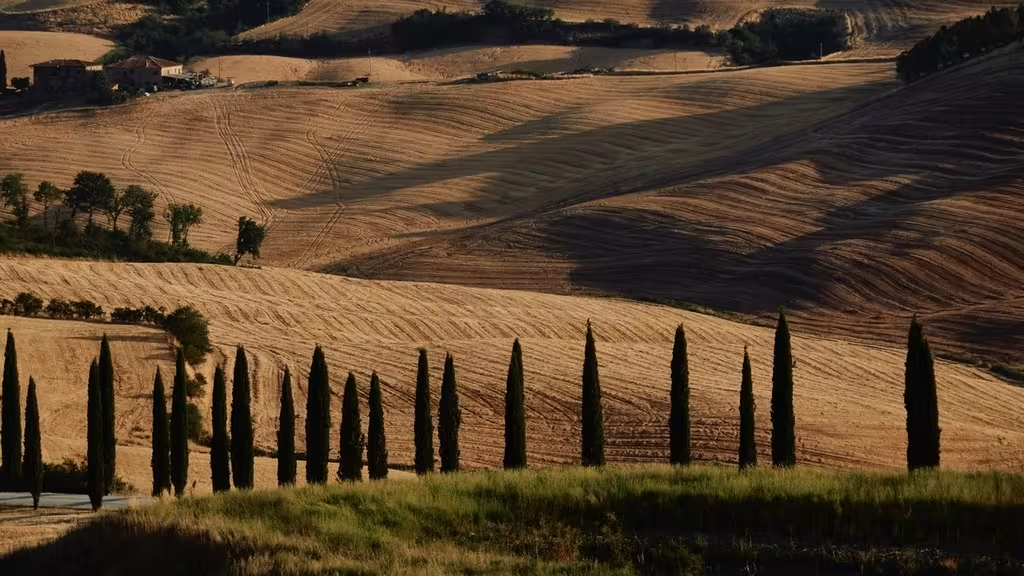
Join our Tuscany Traverse and we’ll take care of the heavy lifting.
Table of Contents
1. Lucca (Red)
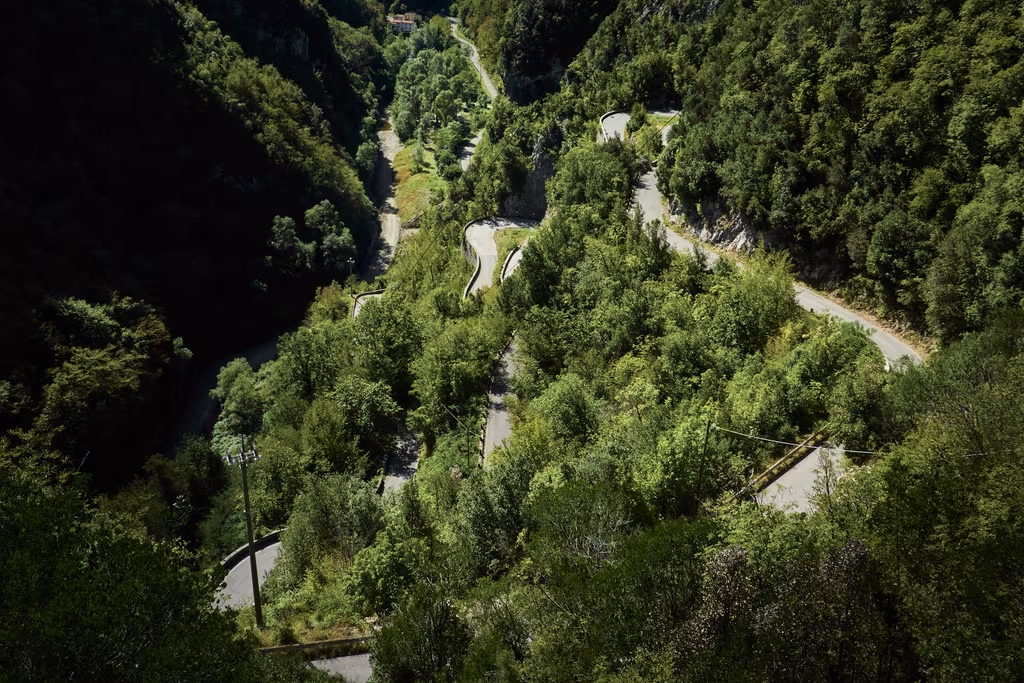
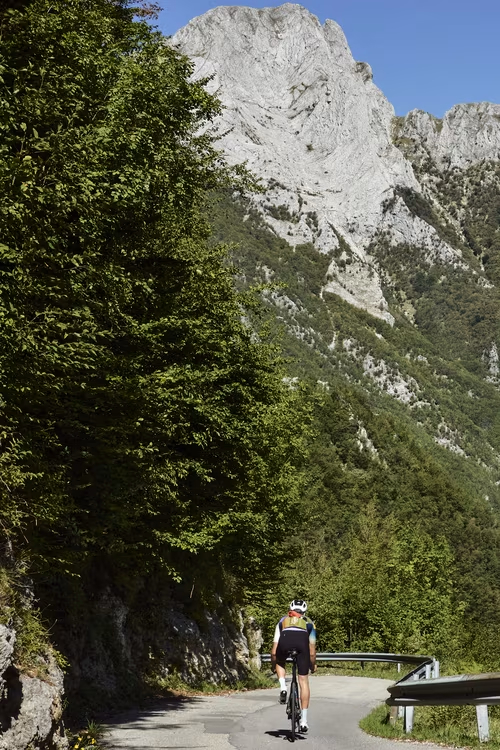
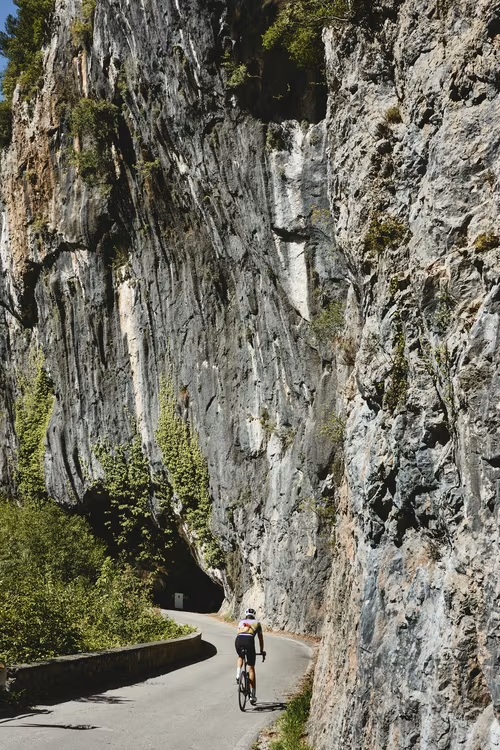
What sets Lucca apart from the rest of Tuscany is its proximity to the mountains—the Apuan Alps, the Apennines, and the Pistoian Mountains.
Few remedies compete with a day on wheels, and this impressive, virtually traffic-free ride deep into the recesses of the Apuan Alps welcomes solace. With 80 percent of the total elevation gain in the first half, you’ll want a descently executed training regime for this task.
The route runs clockwise along the Pania della Croce, the highest peak in the Apuan Alps. If there’s ever a time to ride solo, this is it. Aside from the occasional Fiat Panda, the roads are exclusively yours until the valley.
After the lion’s share of climbing, the ride brings you through a region between the Apuan Alps and the Apennines known as Garfagnana. A medieval hillside village named Barga sits in the foothills, with a church at the top and an incredible view of the entire valley.
Start/Finish: Lucca or Barga
2. Bolgheri and Castagneto Carducci (Blue)
The Etruscan Coast is off most people’s radars (including ours until recently). It’s chock-full not only of archaeological sites but also of some of Italy’s best wines, thermal spas, and, of course, small country roads.
Men’s professional teams like Mapei and Quickstep would train here before or after GP Costa Etruschi, once the first race on the Italian calendar. From hometown hero Paolo Bettini to legendary Annemiek van Vleuten, these roads have prepped World Champions.
The first half of the ride winds up and over the rolling hills, past vineyards surrounding Bolgheri and through the cypress-lined Viale dei Cipressi. Ascending towards the towns of Riparbella and Castellina Marittima, you get wide-open views over the Tyrrhenian Sea.
The northernmost part of the route heads inward through the small Tuscan town of Lajatico, where Andrea Bocelli performs at the outdoor Teatro del Silenzio. This is also the area surrounding Volterra, which you’ll see in the distance as it ascends the ten tight switchbacks of Micciano.
I’ll admit I wasn’t at my best on this stretch of road. Out of water for miles with no fountain in sight, I stopped at an agriturismo, where an elderly gentleman reminded me that my compass was on point. Cyclists and professional teams pass by often because there’s so little traffic on this climb.
My ambitious 200 km route (as expected) was cut through the valley and past the old Etruscan town of Sassetta. For another day.


3. San Gimignano and Volterra (Green)
As a loyal Lucca local, I must confess that Siena is a close runner-up for the best cycling base in Tuscany. It’s hard to be pessimistic when there’s so much beauty in the world, and Siena floods your heart like a whistling Bialetti. Base yourself in this stunning hilltop town, and you’ll have these next three rides at your doorstep.
Let’s start with the north-west side of Siena.
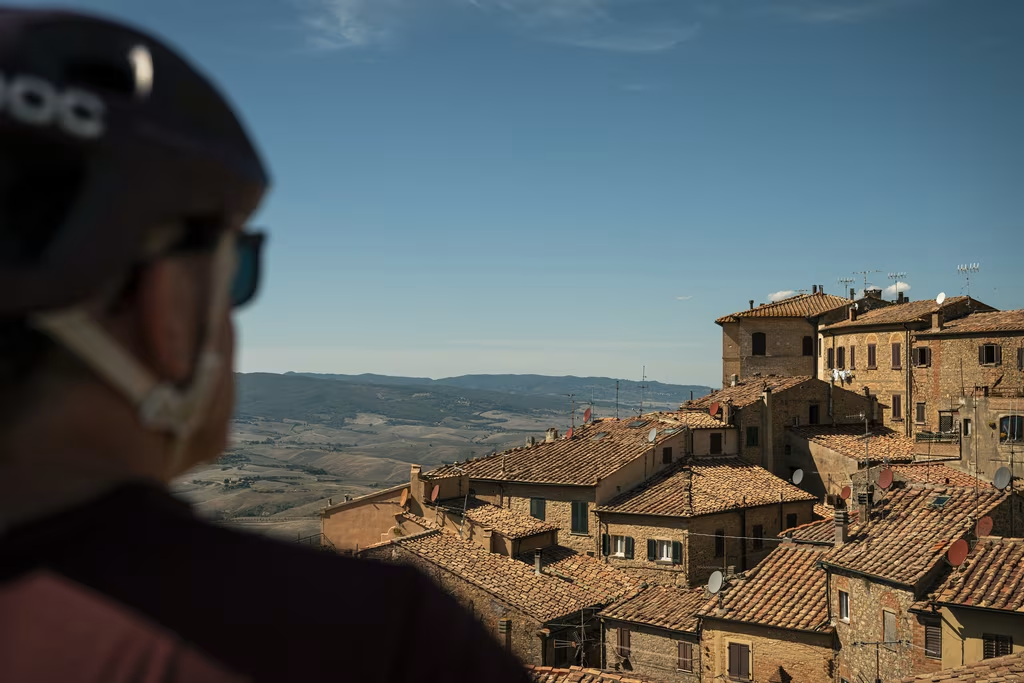
First (and FYI), the cat’s out of the bag about Monteriggioni, San Gimignano, and Volterra. The hype is real, yet by bike you’ll mingle sport with culture and diffuse congregations with a camera in hand. The Italian word is ciclotourismo, and the goal is touring without travesty.
Monteriggioni, built by the Sienese in 1214-19, was a fortified front-line defense to protect its borders against Florence. As referenced in Dante Alighieri’s Divine Comedy, it’s a quaint two-kilometer detour for a coffee in the most remarkable setting.
Next, getting from Monteriggioni to San Gimignano is a Top Guide’s Rubik’s Cube. Anyone who’s been here knows that Poggibonsi and its surroundings can only be navigated with a knight. And the knight on this ride is Via Francigena—the old train tracks turned gravel bike path.
It’s smooth sailing until San Gimignano, where in the off-season, the only sound you’ll hear is the glorious hum of your freehub. In peak season, though, you’ll likely have to dismount and join the salmon stream. The choice is yours.
Lastly is Volterra, a town I love passing through. The intensity is a notch lower and there’s always a place to “be” in Piazza dei Priori. It’s about 25 kilometers from Casole d’Elsa, which has one of the best possible places to stop for lunch: Caffè Casolani.
Start/Finish: Siena, San Gimignano, Volterra, or Casole d’Elsa
4. Chianti Classico (Orange)
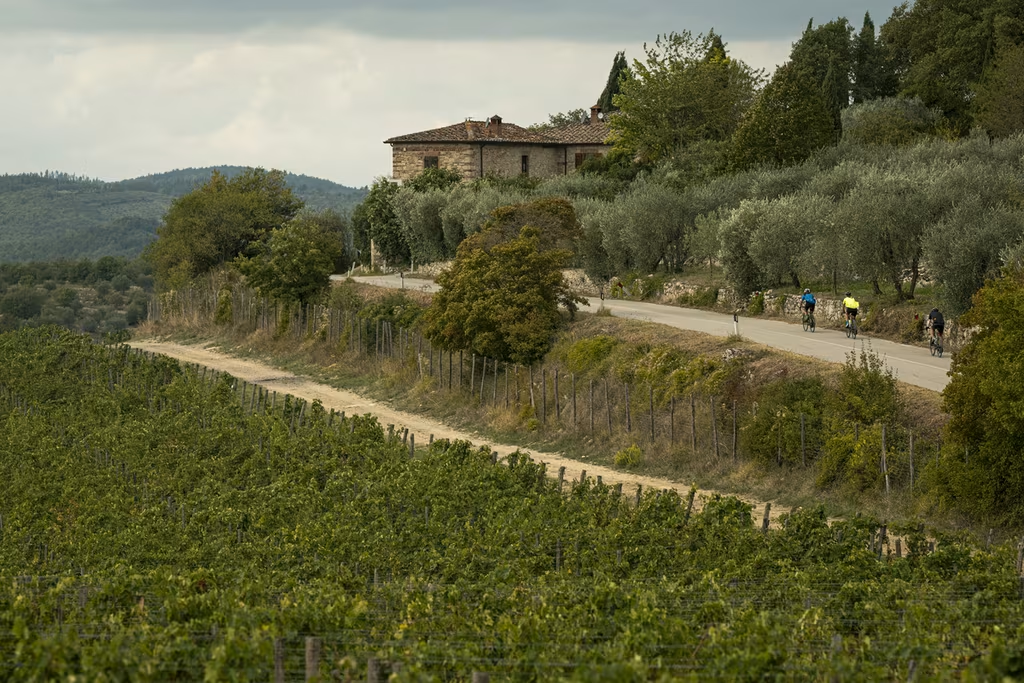
Chianti needs no introduction. People flock here for its good food, wine, and riding. Like the Crete Senesi, anybody and everybody on a bike passes through Chianti.
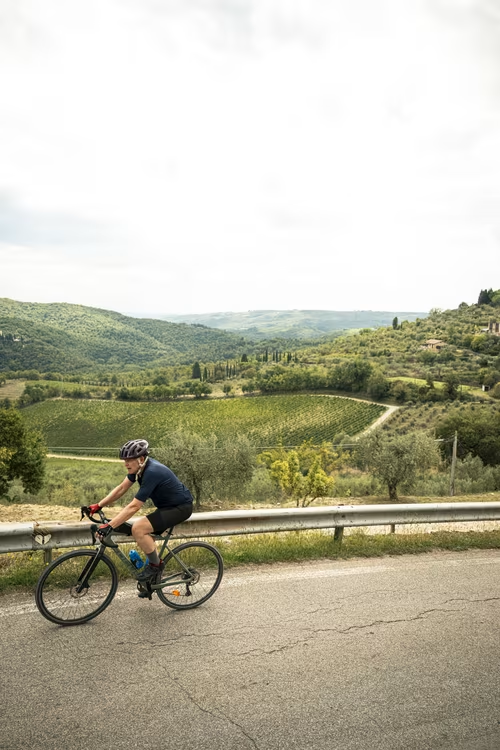
Starting from the heart of Radda, this figure-eight loop passes through the most renowned Chianti towns, internationally acclaimed vineyards and wide-open spaces.
The bottom half follows a few gravel sectors, including the most iconic of them all: Castello di Brolio. There’s a perfectly paved road running parallel, but the best stories come from traveling the unconventional route.
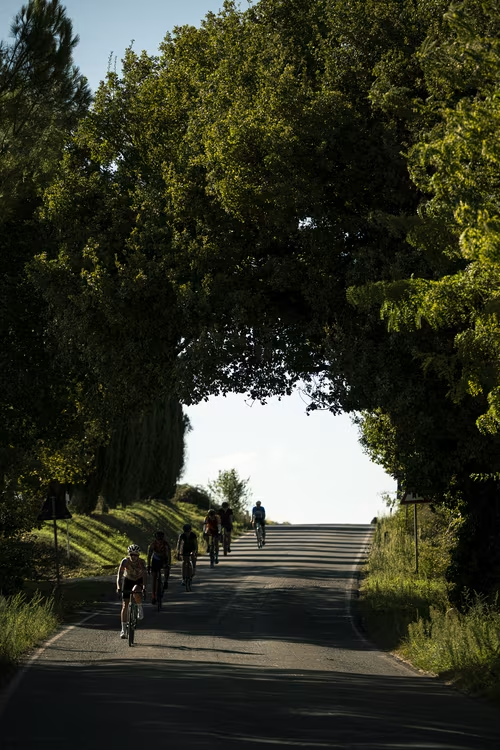
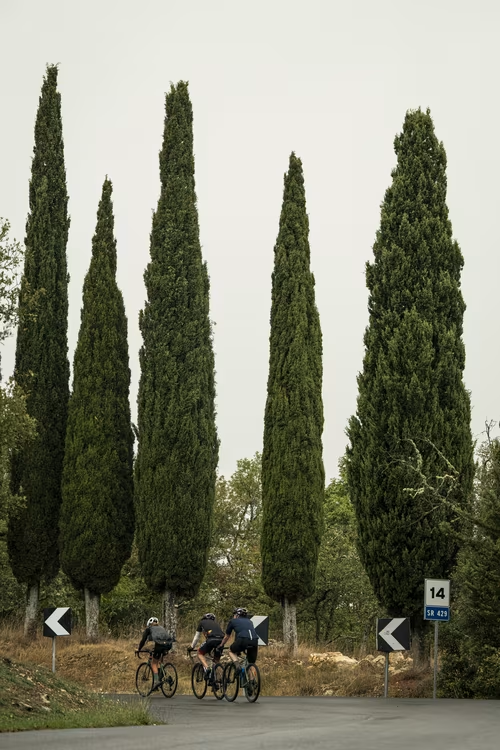
Speaking of roads less traveled, be warned that the ride starts with a fairly rude awakening (in the shade of a handful of skinny cypresses). It’s called “Salita del Albola” and is sensationally beautiful and very #worthit, but the engineer responsible for this road used far too few switchbacks. Should you have any complaints, please address them directly to Romans (or use an e-bike).
Start/Finish: Siena, Radda in Chianti, Greve in Chianti, Gaiole in Chianti, Panzano or Lecchi in Chianti
5. Crete Senesi (Purple)
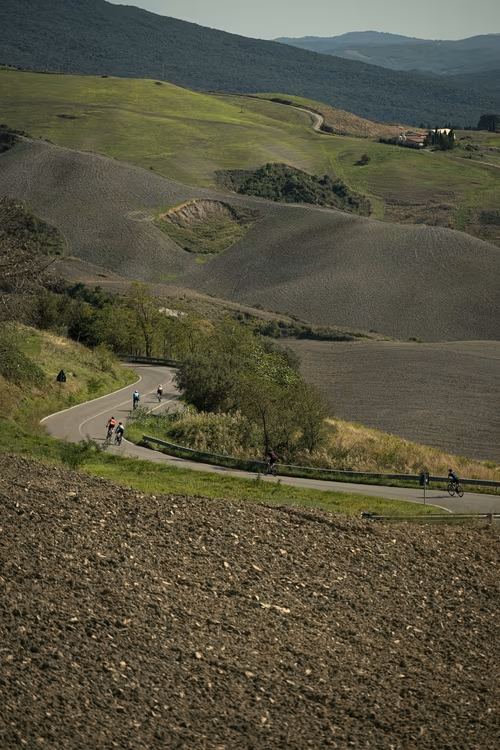
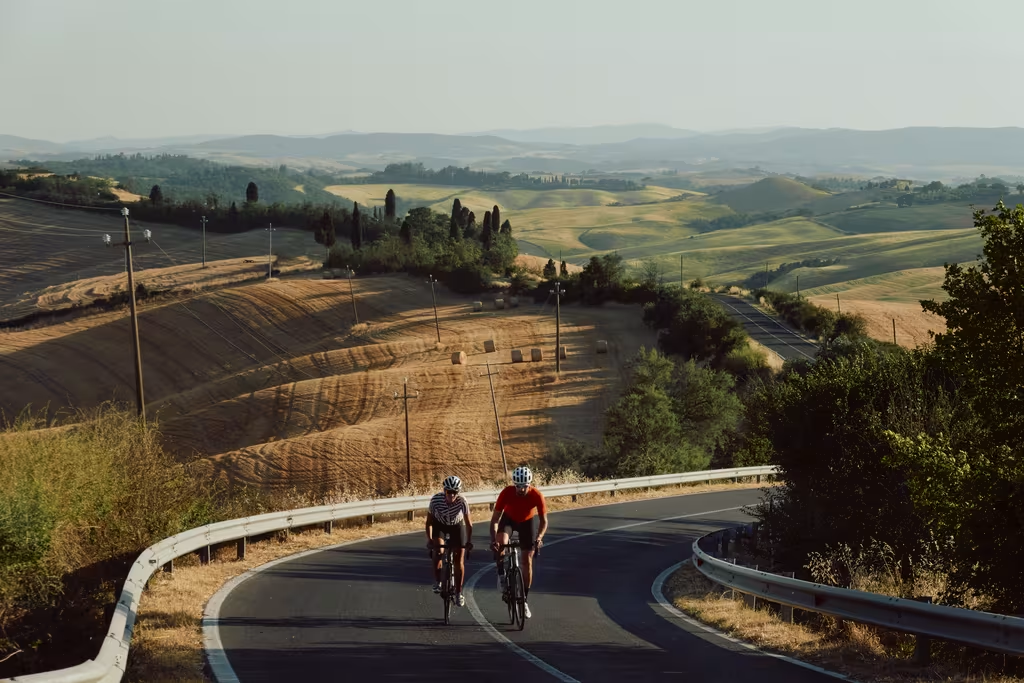
The Crete Senesi is the beating heart of Tuscan cycling. From the Giro d’Italia and Strade Bianche to L’Eroica and the ancient Via Francigena, nearly every iconic road in the region passes through these rolling clay hills.
Starting in Siena’s Piazza del Campo (and available for free in our Tuscany Route Collection), the route follows the Via Francigena out of town toward the Radi Eroica gravel sector and the most splendidly picturesque scenery imaginable.
A modest five-kilometer climb with heart-stopping views brings you up to Asciano, where there are a few lovely cafés and restaurants. Next is Monte Sante Marie, the iconic gravel sector where we’ve watched many Strade Bianche victors make their winning move.
A little goes a long way in this area. The gravel summons competence and the climbs, too. It’s a pedallers’ paradise where the roads are glorious and the views majestic, yet the terrain can punish the uninitiated. Please don’t say you weren’t warned.
Start/Finish: Siena, Castelnuovo Berardenga or Asciano
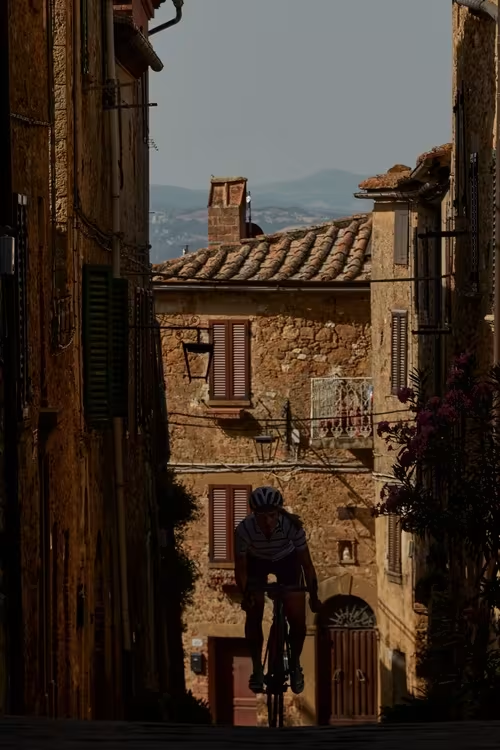
6. Val d’Orcia (Brown)
Plotted within a UNESCO World Heritage landscape, this loop connects farms and villages that reflect Renaissance agricultural prosperity. The region is so stunningly beautiful that there’s a picture-perfect postcard around nearly every turn.
There’s no saving the best for last in Val d’Orcia. It’s like playing your ten favorite songs on repeat. My advice? Proceed with modesty and remember: Moderation moves mountains (I write from personal experience).
If the road pitches to mind- and body-cleansing gradients, savor the stillness and ask yourself a line of Mary Oliver’s The Summer Day: “What is it you plan to do with your one wild and precious life?”
Available inside our Tuscany Route Collection, you’ll see:
- Vitaleta Chapel
- Villages of Monticchiello, Montefollonico, Petroio, and Castelmuzio
- Tempio di San Biagio
- Rows and rows of iconic cypresses
Val d’Orcia and the Renaissance saw an outpouring of beauty, so how can we not ask ourselves: Why is beauty important to us?
As humans, we’re capable of much more than survival. We all need something—beauty, love, challenge, awe—to pull us out of our small, ordinary lives into a realm where we strive for the highest, truest expression of ourselves.
No matter how many times we face pain, we’re all longing to be transported to a place where time stops and where we’re one with the world. It’s the height of our existence, and in the best cases, it connects us to people (and places) who share that appreciation.
Start/Finish: Pienza, Bagni Vignoni, Monticchiello, Montepulciano, Montefollonico, Castelmuzio
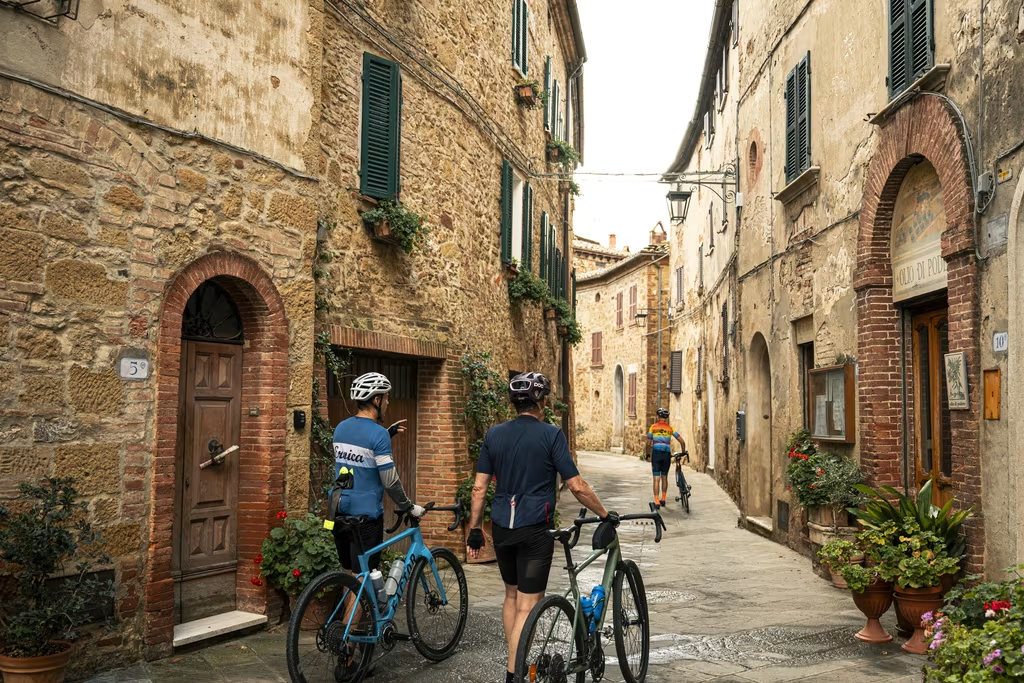
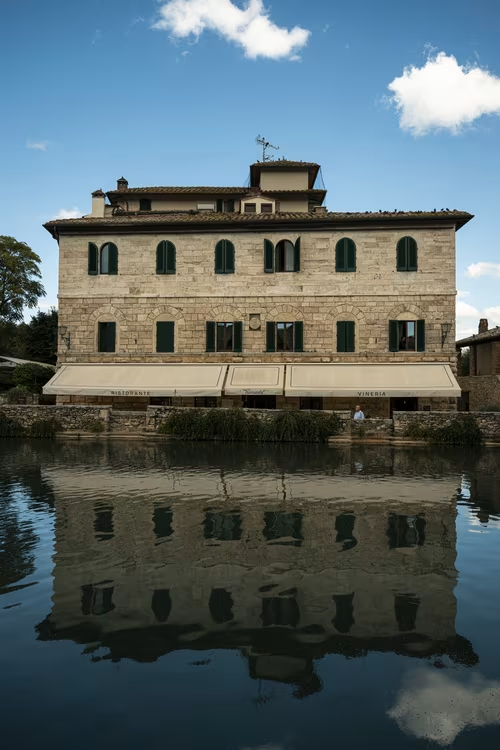
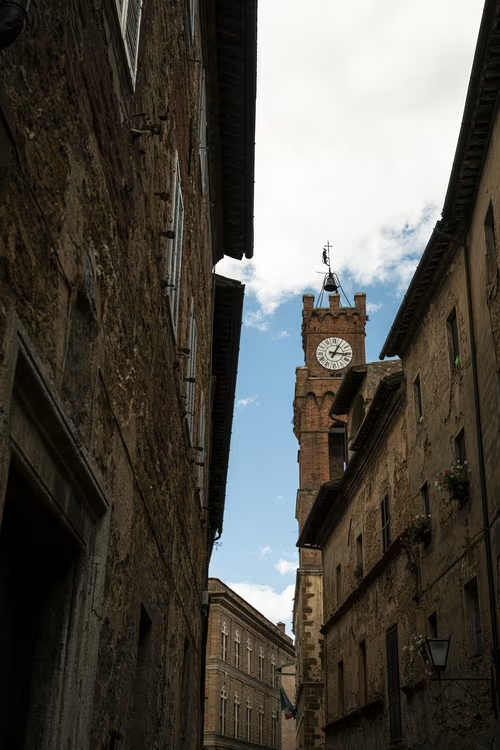
7. Maremma (Black)
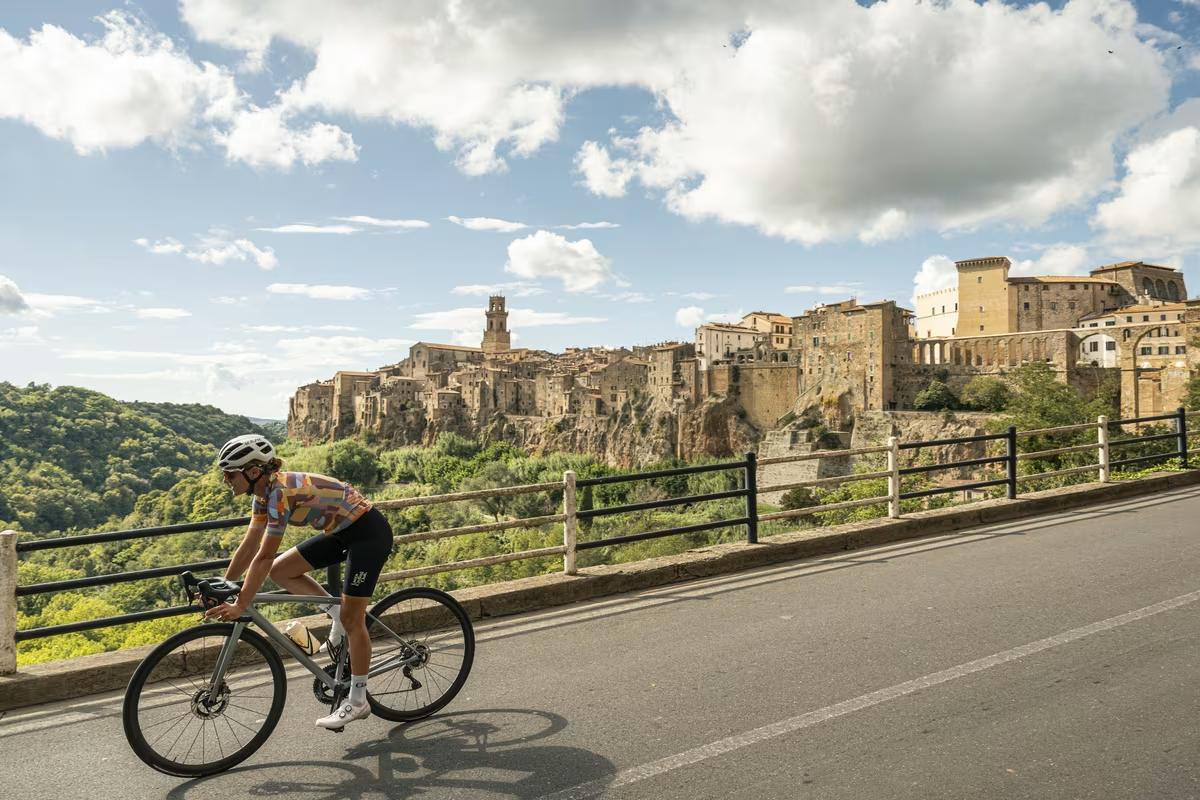
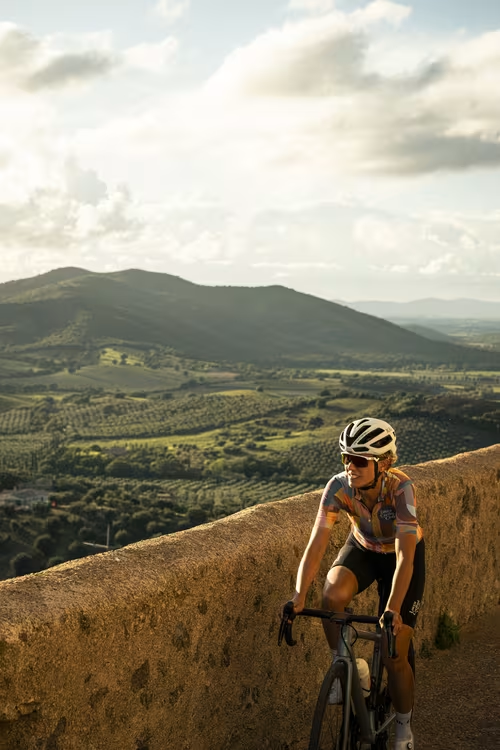
Many know of Tuscany but not necessarily the Maremma. In south-west Tuscany, bordering the region of Lazio, Maremma is defined by its untamed character. It’s a mix of coastal marshland, rolling hills, dense Mediterranean scrubland, and dramatic volcanic tufa cliffs.
Less developed than much of Tuscany, the Maremma delivers a wow factor interspersed throughout its wild landscape. Traffic and tourism are so light that it’s as if you’re the first to discover the area by bike (or at all).
While Maremma is vast, I’ve plotted an ambitious 190-kilometer loop in the southernmost part to show how much there is to see (and for funsies).
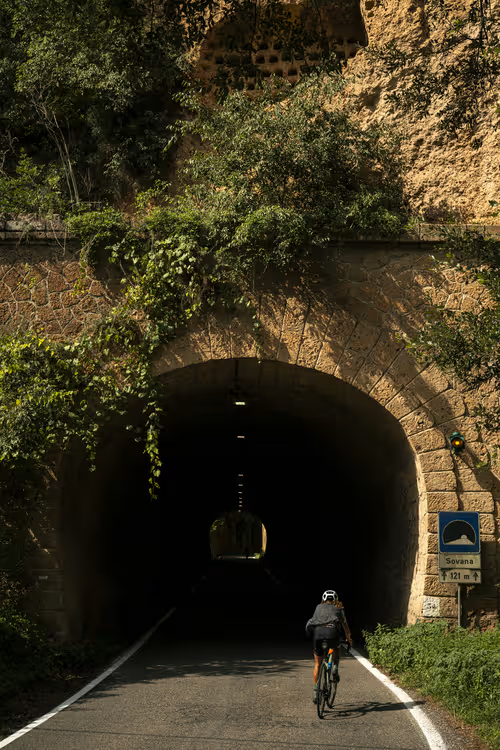
The ride starts in Sorano from the Valle del Tufo, where the Etruscans built three magnificent villages into the rock. The world can feel overwhelming at times, but trust me, you’ll be marveled and uplifted pedaling through tufa towns, tunnels, and cliffs.
Continuing clockwise, the route passes beyond the renowned thermal baths of Saturnia before reaching a lookout point (and the only populated place of the entire ride).
At the southernmost point, before turning east through Scansano and Roccalbegna, you have to see Capalbio. Officially listed among Italy’s most beautiful borghi, it has sweeping views of the sea and the Monte Argentario peninsula. Inside its medieval walls, you’ll find cafés, gelato shops, and a perfect place to let life wash over you.
Please join us in Maremma on our Tuscany Traverse.
8. Island of Elba (Red)
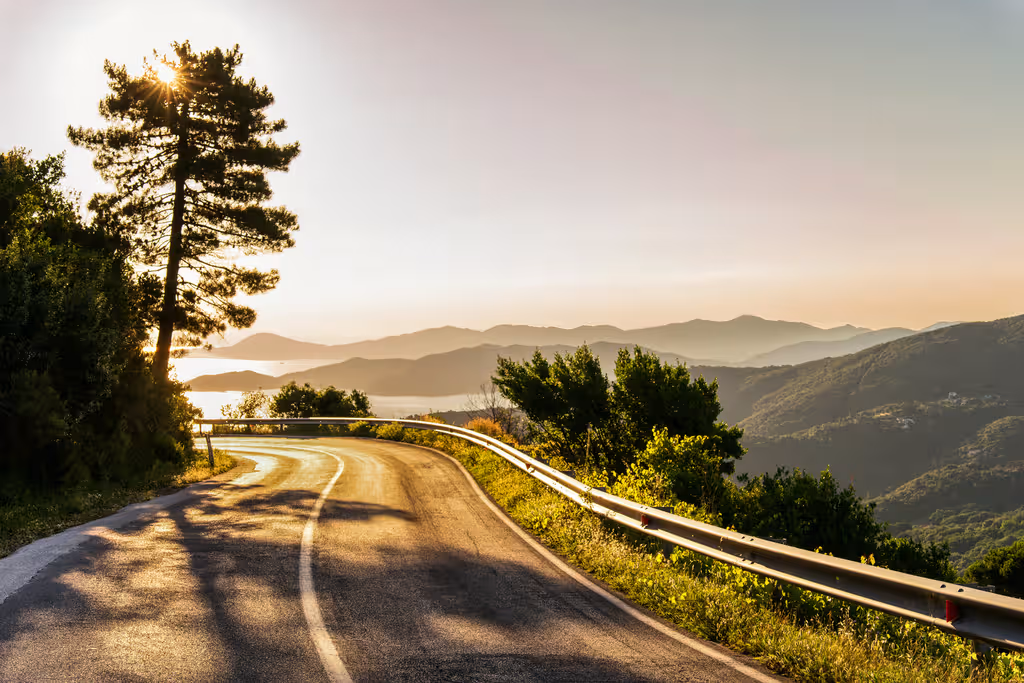
The Island of Elba is where Napoléon Bonaparte was exiled, and it’s small enough that you could cover the entire landmass in a day if you wanted. The ferry from Piombino, on the Tuscan coast, to Portoferraio takes around an hour, with or without a car.
For convenience and because Portoferraio is beautiful, let’s start there. There aren’t many flat roads when it comes to cycling in Tuscany, and that goes for Elba, too.
Monte Capanne is the highest mountain on the island, but we’re forfeiting the peak for the entire pie on this ride. In three days (two nights), you’d cycle all the bases, including Perone—the southwest side of Monte Capanne.
Back to our route. We’ll ride halfway up Monte Capanne to Poggio, then descend to the coastal road hugging the island’s southwest side.
Embarrassingly and given how close Elba is to Lucca, I still haven’t been, so meet Enzo: a fun-loving, beach-kinda guy who takes a yearly trip to the island.
According to Enzo (and in his words), the coastline through the town of Pomonte is “bellissima, strapiombo, stupenda. La costa e panorama più bella che c’è.”
In a nutshell, he’s telling us this coastline and panorama are absolutely unreal.
If you have more than a day, you’ll discover some of the best beaches with the clearest waters in all of Tuscany. Go early or late summer to avoid the crowds.
Start/Finish: Portoferraio


Any tips for cycling in Tuscany?
I moved to Italy in 2012 and have been on a bike ever since teaching my younger sister how to ride. Here are a few things I’ve learned along the way (with the help of Michael Valenti’s artwork). Some eccentric. Others research-backed facts.
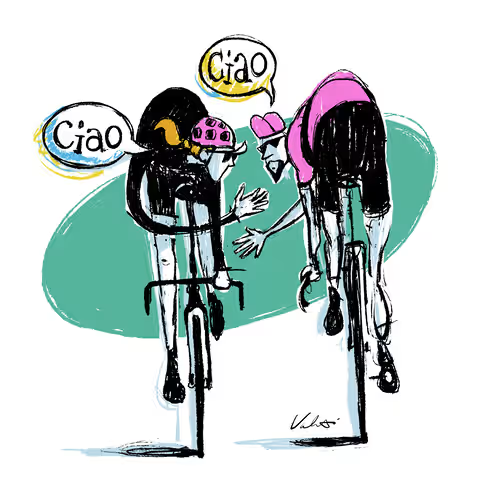
Italians wave!
If countries had personality types, Italy would be off-the-charts extroverted. Italians are warm, curious, and always up for a chat—so, for the love of cycling, don’t be the grumpy non-waver. If the occasion calls for a greeting? Ciao is your casual “hey,” salve is a polite “hello,” and buongiorno is a cheerful “good morning.”
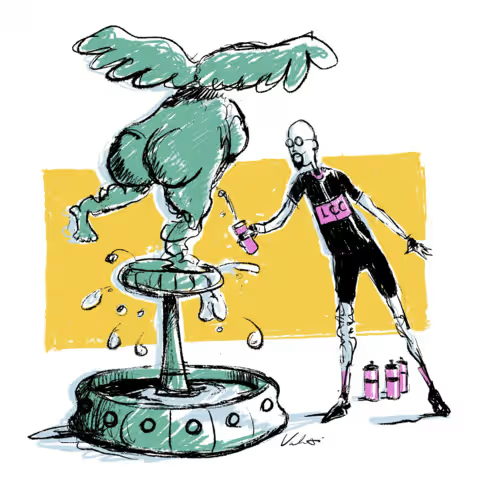
Water fountains are almost everywhere.
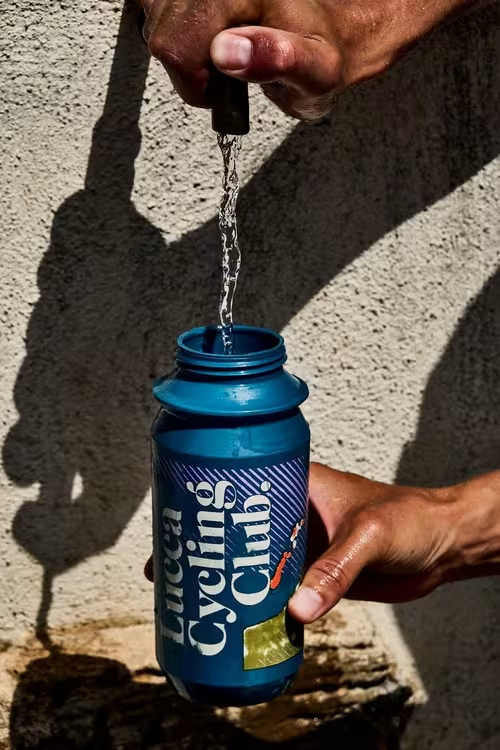
Fountains are scattered across Tuscany—at the top of climbs, in parks, and in town squares—which is why most locals ride with just one water bottle, using the second cage for a spare tube and tools. For epic summer rides, bring two and always skip anything marked non potabile.
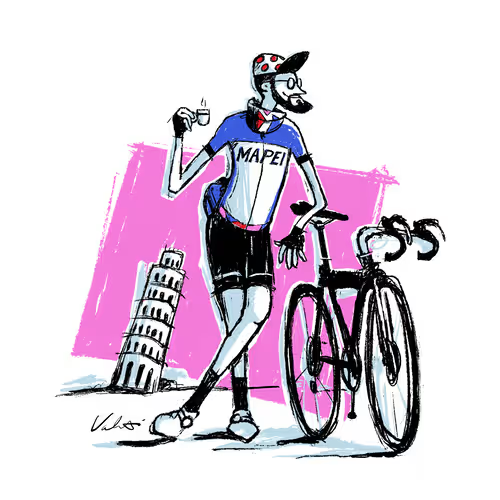
Cafés are bars.
Italy’s love affair with coffee runs deep. Venice was among the first European ports to import coffee beans in the 16th century, and in 1901, Luigi Bezzera patented the espresso machine—designed to brew a single cup expressly for each customer at a saloon-style bar. That speedy, stand-up format is exactly why countless coffee-serving establishments in Italy call themselves bars.
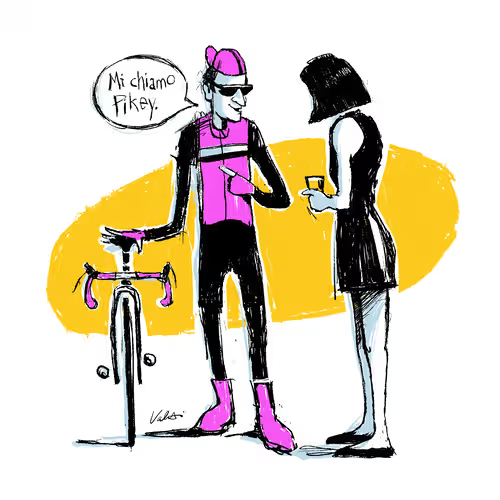
Know a few basic Italian phrases.
Italians are genuinely impressed by legit efforts to learn their language, so why not brush up on the basics? Andiamo means “let’s go!” Sono un/a ciclista (m/f)—I’m a cyclist—is how you find your people. Ordering a coffee is easy: un cappuccino, per favore. When you’re ready to leave, just say quant’è? (how much?).
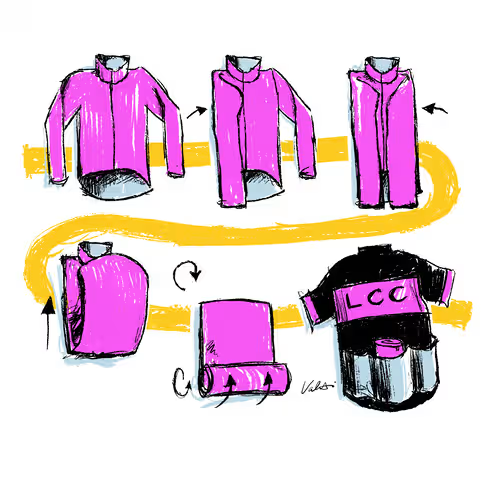
Bring a wind jacket (or gilet).
Italians treat wind protection as a near-religious matter. With terrain made up largely of climbs and descents, a lightweight wind jacket tucked into your back pocket (for descents) makes perfect sense. In the summer, a gilet is usually enough to keep the wind at bay. Old-school tip: a few sheets of newspaper inside your jersey works surprisingly well.
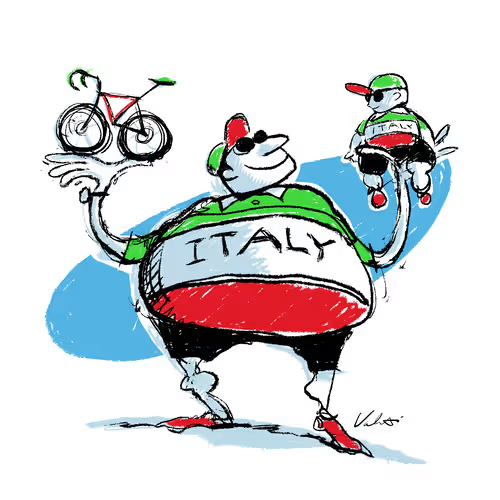
Age is not an excuse.
Worried you’re too old or too unfit to cycle in Tuscany? Banish that thought. Italian cycling clubs start children as young as six, and there’s no retirement age. The language even has a word for cycling grannies: ciclononni. If there’s any place where you belong as a cyclist, it’s in Italy.
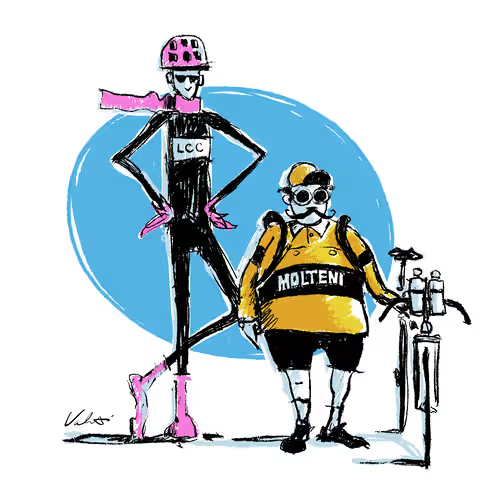
It’s all about club kit.
Italians bring their flair for fashion everywhere. To be a cyclist is to be social, and to be social is to belong to a club (or a team). And all clubs needs matching kit, including Lucca Cycling Club. Just so you know, we’re not the jealous type. Ride for another club and we’ll like you just the same.
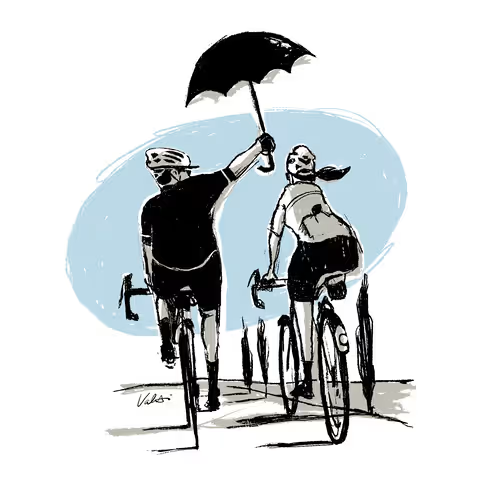
Bad weather passes quickly.
Passion and emotion are baked into all things Italian—the people, the conversations, the weather. Drama is never far, but it rarely lingers. Bad moods and storms tend to blow over within hours, so from April to October, the weather is unlikely to get in the way of a good ride.
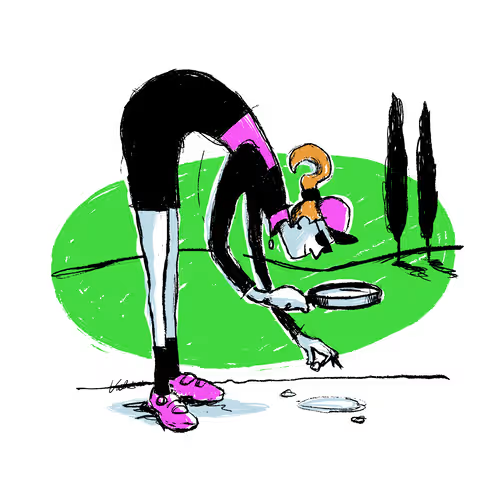
Not all roads are considered equal.
Learning the roads in Tuscany takes serious time and dedication. A low-traffic, scenic route with flawless execution is an art form (deserving of awards). Most locals ride socially or for training, which means their Strava routes are not on par with the chops of a Top Guide. We’ve proudly put in the serious effort in case you can’t do so yourself.
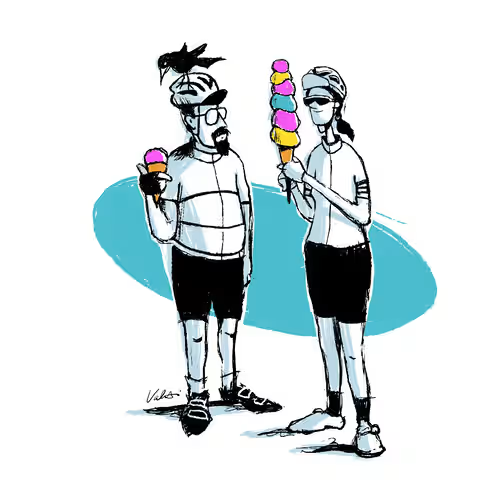
Never underestimate local knowledge and sound logistics.
Nothing beats warm sunshine and a wide open slate until you realize that you’ll probably want to do at least something. That special something comes down to great planning, local knowledge, and exceptional people. Join any of our Italy cycling trips, and we’ll gladly fill that role.
Ready to ride in Tuscany?
Our Tuscany Route Collection—from Lucca and Florence to Siena and Pienza—covers the most iconic scenery the region has to offer. Even a single day is enough to blow the cobwebs off your legs and experience something spectacular. Ride safe and let me know how it goes in the comments below.

Navigate our curated routes across Tuscany — for free
FAQs on Cycling in Tuscany
What’s the best season for cycling in Tuscany?
Spring and autumn are prime seasons for cycling in Tuscany, though rain is possible. The countryside erupts with wildflowers in April and May as temperatures range from 12–20°C. September and October bring golden foliage and slightly warmer days of 15–23°C. Summers can be fiery—reaching up to 38°C in July and August—and winters, though mild, can be grey and wet.
What’s the best bike to ride in Tuscany?
The right bike depends entirely on where you plan to ride. Tuscany offers three distinct surfaces: smooth asphalt, cracked or uneven pavement, and the famous white gravel roads—the strade bianche. If you’re riding primarily on pavement (say, 80% of the time) and can only bring one bike, an endurance road bike with clearance for at least 28mm tires is your best choice.
Where’s the best cycling base in Tuscany?
Picking a cycling base is about vibe. Want to wake up surrounded by silence and cypresses? Go for rural Tuscany but just know that you’ll need a rental car to get around. Prefer an espresso bar around the corner and a direct train from Florence? An urban ambiance might suit you best. We’re admittedly biased toward Lucca as the best cycling base in Tuscany. It has remarkable variety, roads in every direction and a walled city to come home to. As a strong runner-up, we think Siena is fantastic as well.
Great Summary… will be heading down there in October for some gravil bliss.
May the Tuscany bliss ensue, Brett! 🧘🏻
I landed on Alison’s page after searching for inspiration where to spend my holidays. As always it should include nature and cycling as much as I can. Alison’s writing and representation of cycling of Tuscany inspired me.
I finally rode around 70 % of the original distances at my own pace of the routes 1. Lucca (blue) and 7. Bolgheri & Castagneto Carducci (Green) and visited Lucca which attracted me because I read about it here. If you are unsure of your fitness level these tracks are also a good test and maybe inclube plan b’s to take shortcuts 😉
I want to say this: WOW
I will never forget the feelings during my cooldown round around Lucca’s city wall with all the impressions in my head of cycle tracks meandering through paradise and of the breathtaking views I just witnessed.
Thank you Alison/LCC-Team
Thanks so much for sharing, Jonas. It’s top honor to recruit new Lucca aficionados. Please come back when you can!
Tried the blue route north of Lucca in the mountains. Very nice route demanding for a family father, I took it counter-clockwise. Thanks Alison for good blog and route suggestions as well as friendly replies by mail. Highly recommend!
Glad to have you here, Oskar. Thanks for reporting back 🙂
Hi, I came across your website and would love to to some of the rides here but haven’t quite figured out how I can access the gpx files or leverage the route maps. Could you please let me know how to ? Thanks!
Hi Christa, thanks for surfing our site. 🙂
We don’t have gpx files for the exact rides described in this post but we have four free routes in our Tuscany Route Collection.
Have fun!
Alison! I read so many travel blogs and this was so great, I loved your writing and organization! Going to Tuscany in Oct. and we will definitely be doing one of these routes!
So happy to hear, Camilla! Have a great time in Toscana!
The Chianti Classico loop and the Crete Senesi gravel sector work really well linked together if you have more than a single day. Ride the Castello di Brolio gravel stretch out of Radda, then pick up the Radi Eroica and Monte Sante Marie sectors near Siena the next morning. It reads as one longer trip better than two separate day rides, especially if your bags move ahead each night rather than staying on your back. The climb out of Radda and the exposed gravel through Crete Senesi both feel a lot more manageable without overnight kit on top.