
There’s nothing quite like a warm summer bike ride in the Apennine foothills of Lucca, but to stop at cycling would be doing this captivating corner of Italy an immense injustice.
Variety is the spice of life, and not everyone longs to labor up San Pellegrino’s hellacious ramps with little more than a pie and Strava kudos to show for it. As the adage goes, if you want to be more interesting, learn new and interesting things.
In the last decade, I’ve collected an overflow of these mantra-driven experiences in a place where life, simply put, is wonderful. A place shaped by human activity and curiosity since prehistoric times.
Lucca’s earliest settlers date back to the Etruscans, but the most extensive documentation of its ancient past belongs to its Roman construction. From the cardo–decumanus street plan to the amphitheatre and the ancient forum (now Piazza San Michele), the city’s Roman framework remains remarkably intact.
Commerce is the true vocation of the Lucchesi, and the city’s enormous wealth was financed by a booming silk trade that built churches (100 of them), monuments, country villas, and sprawling estates.
But you won’t need me to discover Lucca’s most renowned landmarks (like Guinigi Tower, Piazza dell’Anfiteatro, or the Puccini Museum). You’ll stumble upon them by strolling aimlessly through the historic center.
Plus, you’re not in a guidebook—you’re here, where I can share my beyond-the-bike slow travel secrets unfettered. So, without further ado: My favorite things to do in Lucca.
Table of Contents
Things to Do in Lucca on Foot
1. Attend a Puccini Opera Concert
Giacomo Puccini was one of Italian opera’s greatest composers, and until recently, few knew he was Lucchese—that is, from Lucca. In 2004, eighty years after his death, local citizens founded the Puccini e la Sua Lucca International Festival, an opera concert celebrating his life and work.
Every evening from April 1st to October 29th, the Church of San Giovanni hosts concerts that regularly feature performances of his most famous operas, including La Bohème, Tosca, Madama Butterfly, and Turandot. Tickets are available at the door for €30.
Website: Puccini e la sua Lucca
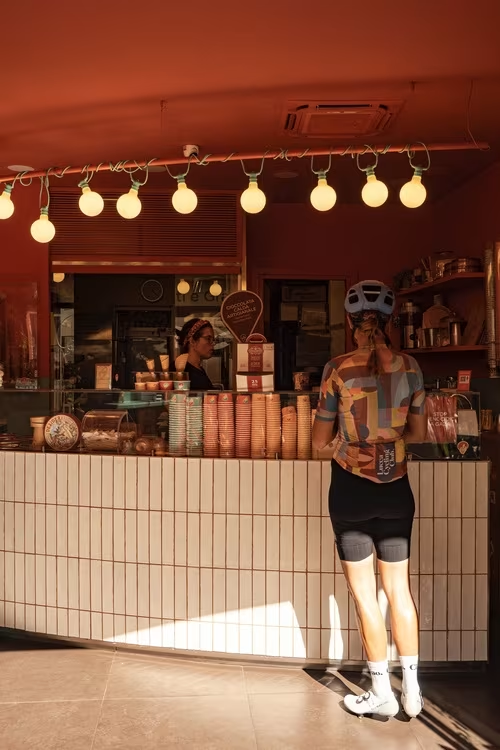
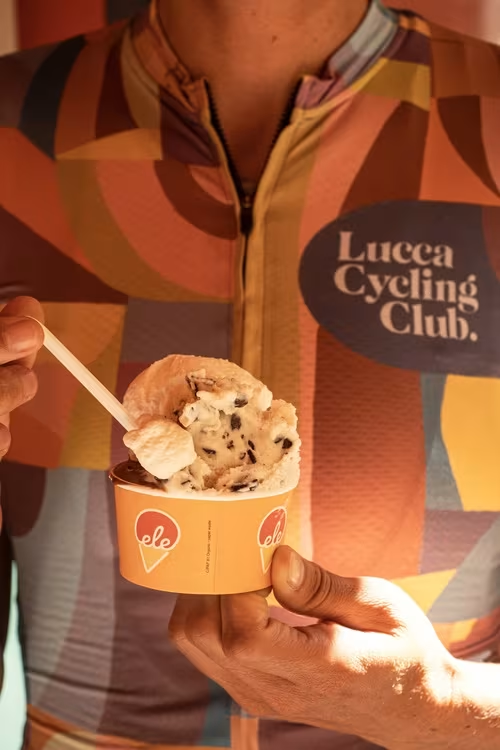
2. Eat Gelato in Lucca’s Historic Center
Acquiring fine artisanal Italian gelato can’t be that hard, right? Spend some meaningful time in Italy, and you’ll discover that ice cream, like anything, has prestige, too. Years of focused fieldwork have taught me how to recognize the best from the rest and I’ve got scores of success stories to prove it.
First, many small Italian towns don’t have dedicated ice cream parlors. You’ll find so-called “ice cream” in cafes (or bars) reselling mass-market, commercial sludge to the undiscerning mass-market tourist. Not in Lucca. And not without good judgment.
Modern establishments like Momo Gelati and Cremeria Opera, along with historic favorites such as Gelateria Veneta and I Gelati di Piero, all enable the Lucca Gelato Addiction. Just turn up and press “play.”
What do the best have in common? Flavors are stored in lidded stainless-steel wells, NOT as brightly colored piles of artificially concocted substances behind curved glass. Pistachio is the benchmark flavor because it’s the costliest to produce. A bright green pistachio is guaranteed to be a science experiment in the aforementioned category of radioactive Jell-O.
Top Recommendations: Ele Gelati e Granite, Momo Gelati
3. Attend a Lucca Summer Festival Concert
Lucca’s three-week Summer Music Festival from late June through late July is a wonder to behold. It draws huge acts from every corner of the world to our small bit of Italy. Artists like The Rolling Stones, Elton John, Sting, Tracy Chapman, and Justin Bieber have all graced the stages in our little Tuscan hideaway.
The annual festival is held in Piazza Napoleone (steps away from the ticket office) and just outside the historic wall near Porta San Pietro.
Website: Lucca Summer Festival
4. Learn Italian in Lucca
It’s a shallow existence without doing something that will fundamentally change you on a heart-and-soul level. If you’ve been in the club for a while, then you know I’m all about taking a deeper dive and really getting to know a place. It’s why I found my home in Lucca and why I’ve become a big fan of slow travel. That is, tapping the brakes and really getting to know a place. Its people. Its culture. Its idiosyncrasies.
One of the easiest ways to get started on that path is to learn the language and begin engaging and relating with the local community. Making progress on something as ambitious as learning a foreign language isn’t a goal most people have. Yet, if you identify as a lifelong learner, you’ll find teachers anywhere and everywhere. And when you find a good Italian teacher, you’ll learn much more than the language.
Top Recommendation: Lucca Italian School
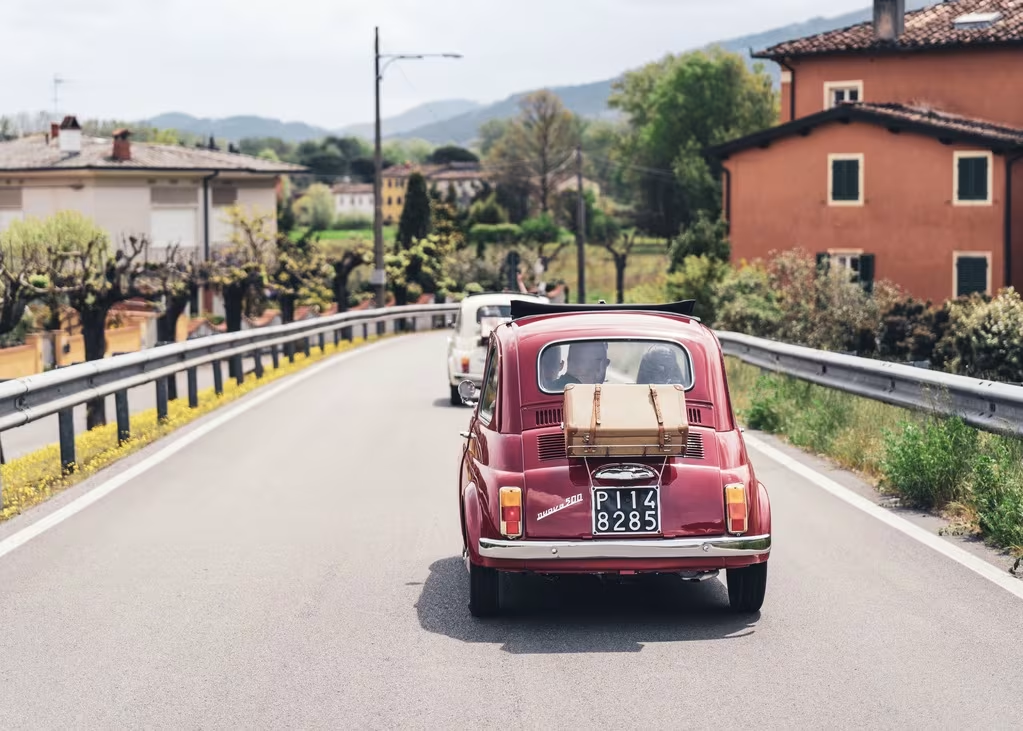
5. Tour the Countryside with a Vintage Fiat 500 or a Piaggio Vespa
Sun on stone, linen shirts, espresso at noon, and a soul that’s forever young. True beauty lies in simplicity and Italian refinement exists in a timeless, suspended world.
Who could you be when elegance looks so effortless?
Iconic brands like Fiat and Piaggio invite you to project that fantasy onto a cinematic-like life the moment you’ve got key in hand. Go ahead, start the ignition and cruise the cypress-framed countryside where you’ve earned the right (and status) to advance with heroic inefficiency. Afterall, there’s no harm in romanticizing a life without resistance.
Top Recommendation: Drive the Vintage
Things to Do in Lucca by Bike
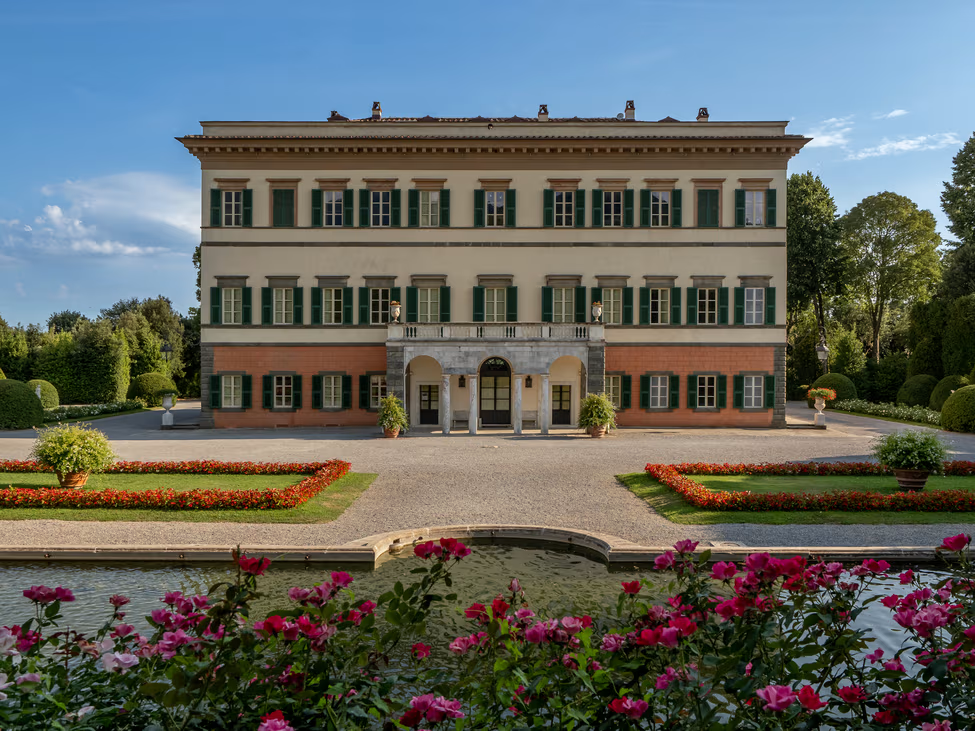
6. Visit Villa Reale di Marlia
Italian villas are, for the uninitiated, something else. Vast expanses of what can only be described as “house,” city-state-sized tracts of land, and 15th-century construction techniques all come together to make something inconceivable, impractical, absurd, and ultimately, patently beautiful.
Dating from the 1400s, Villa Reale has a storied past, culminating in Princess Elisa Bonaparte’s purchase of the property in 1806. Her keen eye for aesthetics and decor elevated the estate far beyond any other villa in the area. It changed hands multiple times in the intervening 200+ years, finally falling into disrepair—until now.
Purchased in 2015 by a Swiss couple passionate about its storied past, it’s undergoing an exhaustive restoration. Their dedication shines through every aspect of the rehabilitation, from the estate’s Babylonian hanging gardens to Princess Bonaparte’s bedroom. Every detail is impeccably mapped out, including an on-premises cafe.
This is one of my go-to things to do in Lucca when my parents and other non-cycling friends are in town. You’ll easily get lost in the gardens and spend half a day here. If not by car, take a hybrid bike (most bike shops in town rent them) and ride the gravel Puccini bike path along the Serchio River to Ponte a Moriano, then continue on Via delle Ville.
Website: Villa Reale di Marlia
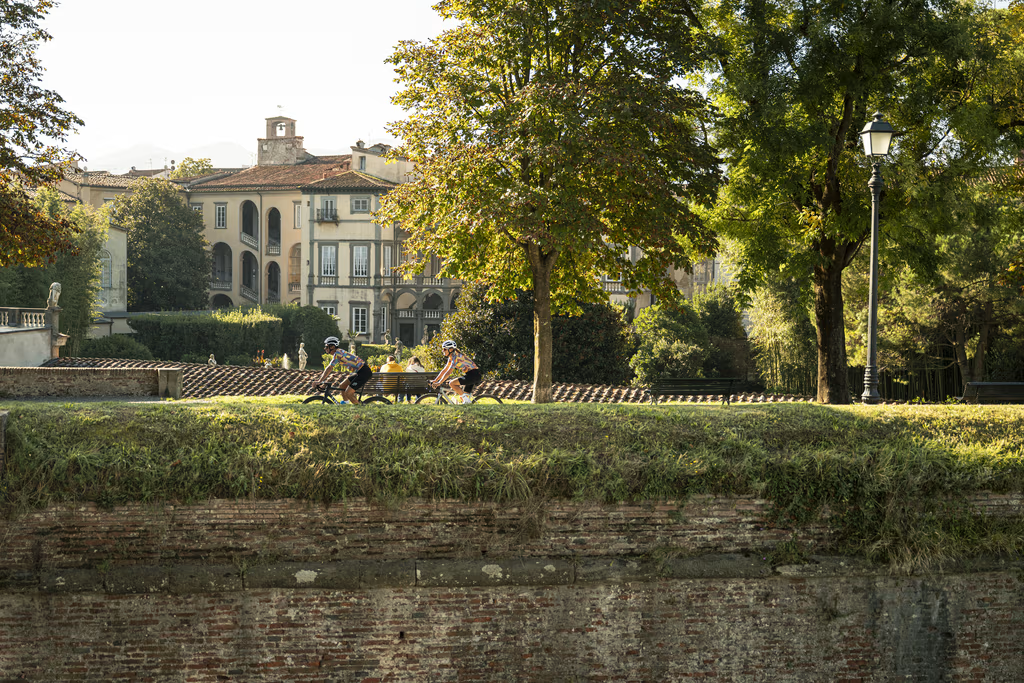
7. Pedal Lucca’s 16th-Century Walls (Or Do Almost Anything You Want)
Three periods define the expansion of Lucca and its impressive wall: Roman, Medieval, and Renaissance (the 4-kilometer version that stands intact today). Their primary purpose was military—the tall, thin medieval walls, designed to prevent infantry attacks, had become completely useless against cannon fire.
In the end, Lucca was (proudly) never besieged, and the walls went unused (except in 1812 when the Serchio River flooded). So in 1820, the Duchess of Lucca, Maria Luisa of Bourbon, commissioned Lucchese architect Lorenzo Nottolini to convert the space into a permanent public walkway.
Using a method that prioritized natural resources, the walls we see today are made of large masses of pressed and beaten earth and dried plant materials held together by brick and stone. The centuries-old trees were planted to consolidate the enormous mass of earth.
What’s left from medieval and Roman times? Porta dei Borghi and Porta San Gervasio are the most significant remnants of the medieval walls. Not much remains from the Roman era, but there’s a formidable section of the wall inside the church of Santa Maria della Rosa.
In our modern times, Lucca’s walls are a place to be and do almost anything you want. I’ve seen teenagers necking, roller skiers making their laps, amateur cyclists on time trial bikes fitted with disc wheels, walkers with trekking poles, and adults on balance bikes. Then, of course, I have my own fair share of activities that shall not be further elaborated.
8. Go for a Bike Ride Through Lucca’s Hillside
I discovered Lucca in 2010 when a teammate introduced me to her friend, Liza, who brought me onto a Lucchese team slated to hit all the major European races. Moving to Lucca mid-season with the prospect of stepping up my cycling wasn’t a hard decision. I landed in Milan, bounced between trains and cities all day, and arrived in Lucca by dinner time—all without the capacity to point out Tuscany (or Lucca) on a map. I was 27 and blissfully ignorant.
I turned up as the fifth female cyclist to inhabit a 40-square-meter studio apartment overlooking Piazza San Romano. It was very, let’s say, cozy. We could see from the kitchen window, through the courtyard, and into the bathroom window if anybody was sitting on the can.
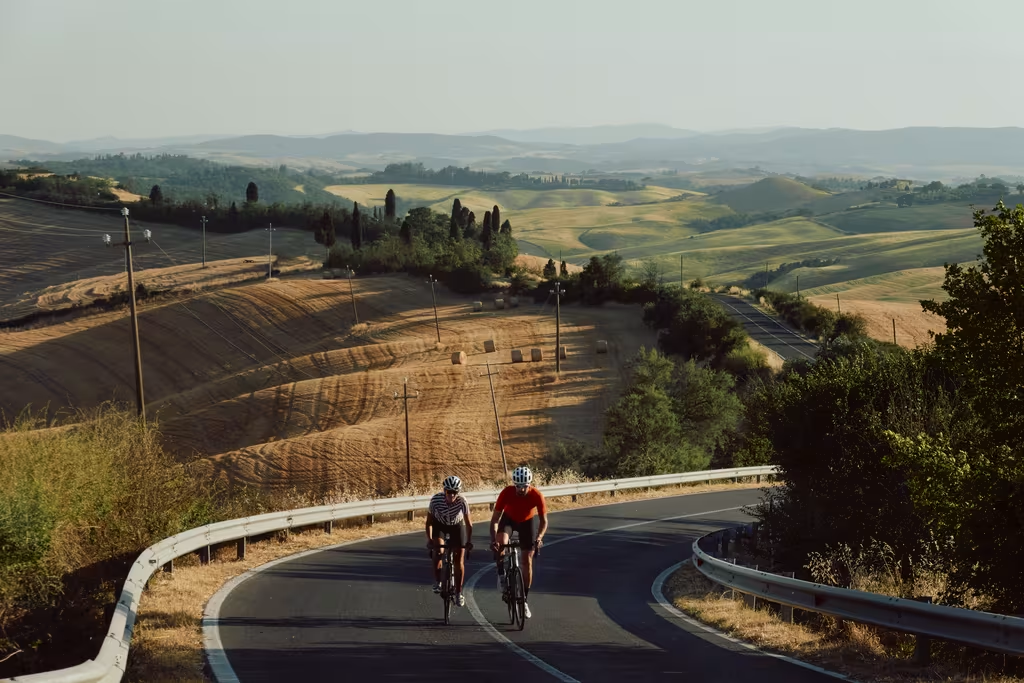
I’ve since learned that Lucca is nearly equidistant from the Tyrrhenian Sea and the peaks of the Apuan Alps, which makes the cycling in Lucca world-class. From flat plains to rolling hills to alpine climbs, there’s bikeable terrain for #newbies, recreational e-bikers, and racers with palmarès. The lands of Lucca honestly offer a ride for everyone.
As a head start, I have a 47-kilometer self-guided route through Lucca’s most scenic landscapes (just click the button below). From Lucca’s Santa Maria Gate, the ride crosses the Plain of Lucca before winding partway up the Pizzorne foothills and through the villages of Matraia, Valgiano, and San Gennaro.

Navigate our curated routes across Tuscany — for free
9. Ride Alongside Lucca’s Nottolini Aqueduct
In Roman times, Lucca had an underground aqueduct originating in the Moriano area that supplied several fountains within the city walls. Eventually, the sources were lost and Lucca relied on wells that became a hygienic cause for pause.
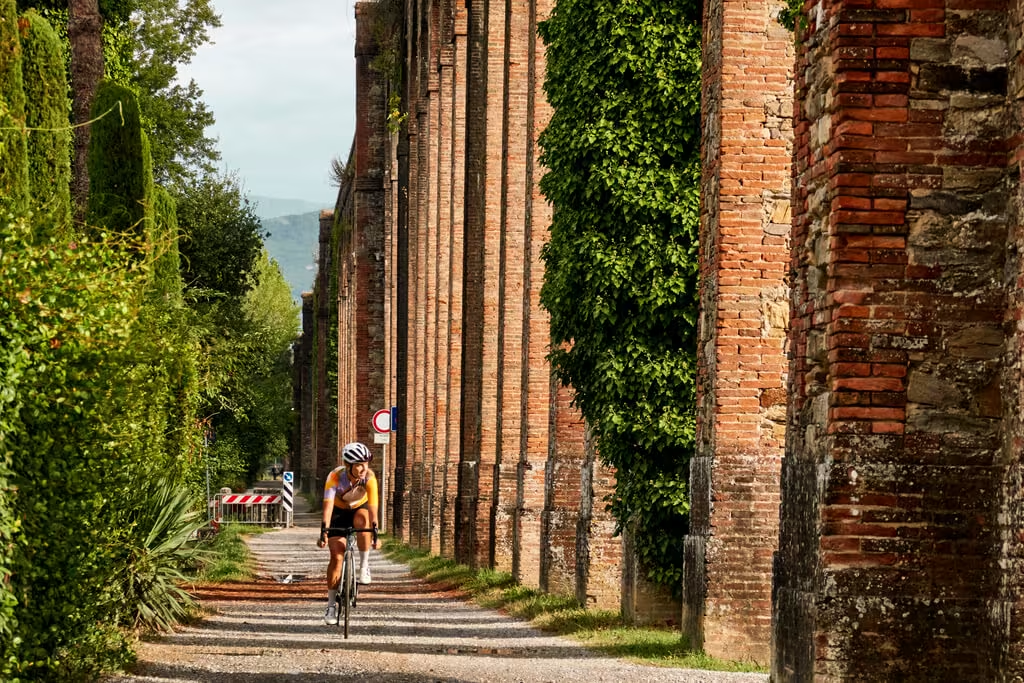
In 1822, Maria Luisa of Bourbon pushed forth the agenda to build an aqueduct and appointed architect Lorenzo Nottolini to make it happen. 28 years later (in 1851), the Neoclassical-style aqueduct with 460 arches, stretching 3.2 kilometres, was completed. The 12-meter-high architectural masterpiece (with cisterns at each end) had two channels: one for drinking water and the other to supply the monumental fountains.
Today, the structure is still largely intact, minus the six arches that were removed for the A11 Autostrada (and partly destroyed during Nazi occupation). It has a two-meter-wide walking and biking path parallel to the arches and a pedestrian bridge over the motorway.
Beyond the cistern in Gaumo, there’s a trail leading towards the original 18 springs named “At the Golden Words,” after local farmers mistook the brass letters for gold. Add this one to your list of free (and fun) things to do in Lucca.
Location: Acquedotto Nottolini
Things to Do in Lucca by Car
10. Explore the Outdoors Off-Road
You don’t have to be a cyclist (or hiker) to appreciate that Lucca is surrounded by the glorious outdoors. In San Cassiano di Controne (near Bagni di Lucca), my friend Sofia runs slick Yamaha-sponsored excursions on quads, e-mountain bikes, and motorbikes.
Her grandparents were forced to escape dire financial straits in search of a more promising future in the UK, where Sofia was born. Two generations later, she’s back under her own entrepreneurial prowess, sharing the open air with anybody up for an adventure.
Website: Val di Lima Off Road
11. Tour the Marble Mines
Marble has been an integral part of Italian history from the time of Rome through to the Renaissance to today. Where did it all come from? Carrara, just to the north of Lucca in the Apuan Alps.
The Roman Forum, Michelangelo’s David, the aforementioned Leaning Tower of Pisa, and countless other landmark works were hewn from gleaming alabaster quarried from the mountains around Lucca. How could something so vast and majestic be excavated? Well, it takes a maestro…
While the practice and ownership have become contested topics, the mines remain operational and supply the prized stone to markets worldwide. If you can make it out to the Marble Mountains, it’s an awe-inspiring detour you won’t want to miss.
Say you do find yourself shopping for premium marble, you may as well double down and swing into the Forte dei Marmi on your way back.
On its pedestrian-only streets, you’ll find the usual laundry list of high-end designer shops (Prada, Versace, Moncler, Rolex, and Off-White, to name a few). Among the big names are high-end local gems like Morini (jewelry/watches), Colibri (beachwear), and Borelli’s (menswear). We kindly request that you book a Guided Ride (or a few) with us before maxing out your cards.
Location: Fantiscritti Marble Quarries (near Carrara)

12. Dine at One of Lucca’s Summer Sagras
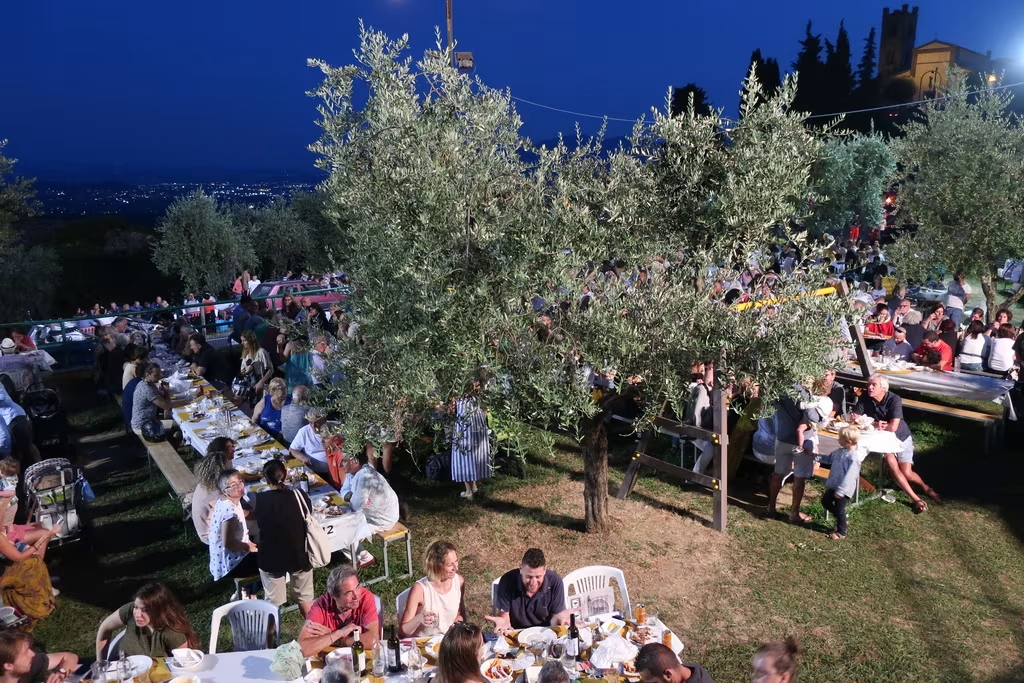
Imagine an entire town coming together to celebrate their traditions around food. Now imagine that town in the heart of Tuscany, where so many Western culinary traditions emanate from, and where everyone is family.
Welcome to the Sagra, where communities come together to eat, drink, and be merry. As much a celebration as cultural preservation, you’ll see eye-searing roadside posters pedaling during the summer months, ones advertising Sagras far and wide.
My picks for the best? Sagra di Oliva Dolce di Matraia and Sagra della Zuppa di Aquilea, but you’ll be hard-pressed to find a bad one. Pro tip: Bring cash, as they often don’t accept credit cards.
Sagra schedule for Lucca: Sagre Toscane
13. Relax at the Seaside Beaches
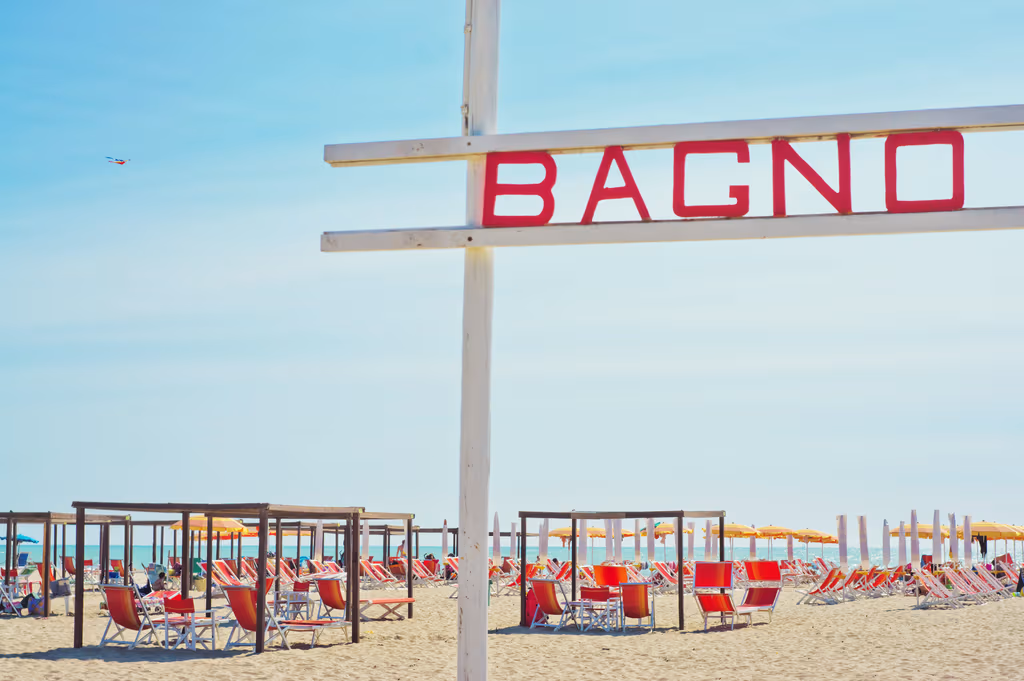
Living in Lucca (and Italy) has perks. It’s just a 30- to 45-minute drive from the Tyrrhenian Sea, so the Lucchese formula for free time is simple: Mountains in the morning, beach in the afternoon.
Let’s split the coastline nearest Lucca into four basic categories: Versilia, Viareggio, Marina di Pisa and the area south of Livorno.
Forte dei Marmi and Marina di Pietrasanta make up Versilia, or the stretch of coastal Tuscany northwest of Lucca. It’s awash with nightlife, fine dining, and youth looking for good times. From the legendary La Capannina nightclub to Bocelli’s 400-euro-a-day tented sunbeds to beach huts with eyepopping rents, Versilia is the place to put on your Sophia Loren sunglasses and let the waves of sweet, sweet life wash over you.
Continuing south along the coastline, there’s Viareggio and then Marina di Vecchiano. It may not have the pendulum of human drama to the extent of its northern counterpart, but the region shares the same towering backdrop: the Apuan Alps. Then again, with a shipyard building some of the world’s most renowned superyachts, you won’t be slumming it in Viareggio either.
Next, and within striking distance of Lucca, is Pisa’s marina. The entire coastline is on the up and up and Marina di Pisa doesn’t lag behind. Bring the party no matter where you go and you’ll have a good time—without the pricetag of a human organ.
South of Livorno, beginning at Calafuria, the otherwise flat shore turns into wild beaches buttressed by craggy peaks and sandy enclaves with water so clear you can see the seafloor. Word to the wise: Leave the flip-flops behind. Beach access often involves narrow stone steps or navigating large, uneven rocks.
Recommendations: Bagno Maurizio & Oasi Mare e Dune
14. Taste Wine & Olive Oil in the Hillside Surrounding Lucca
Vino anybody? But first, an introduction to Lucchesi wines.
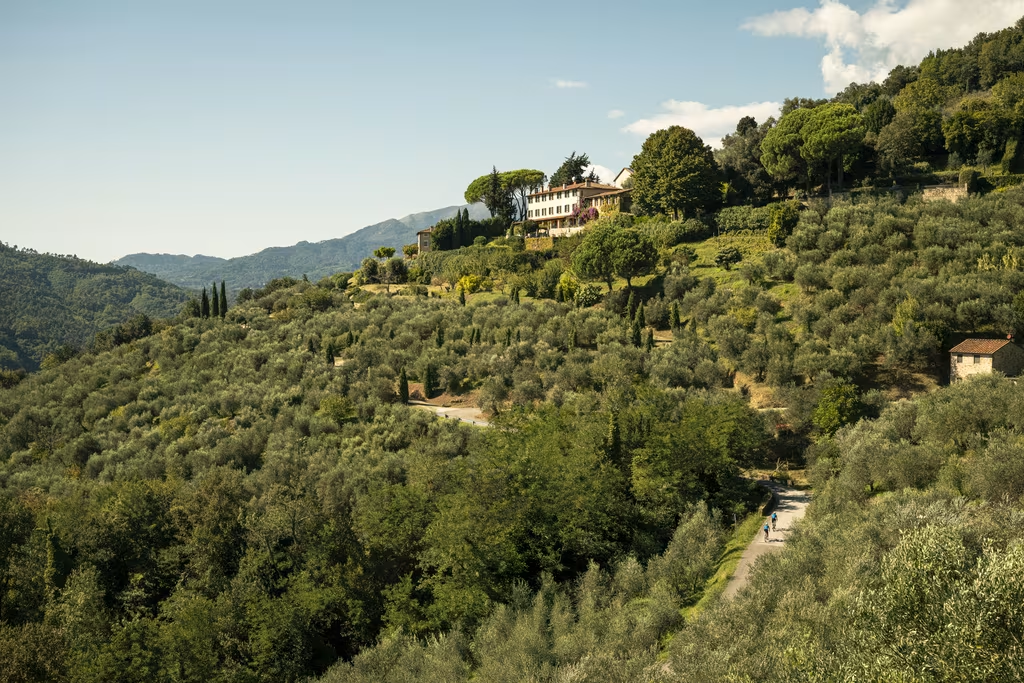
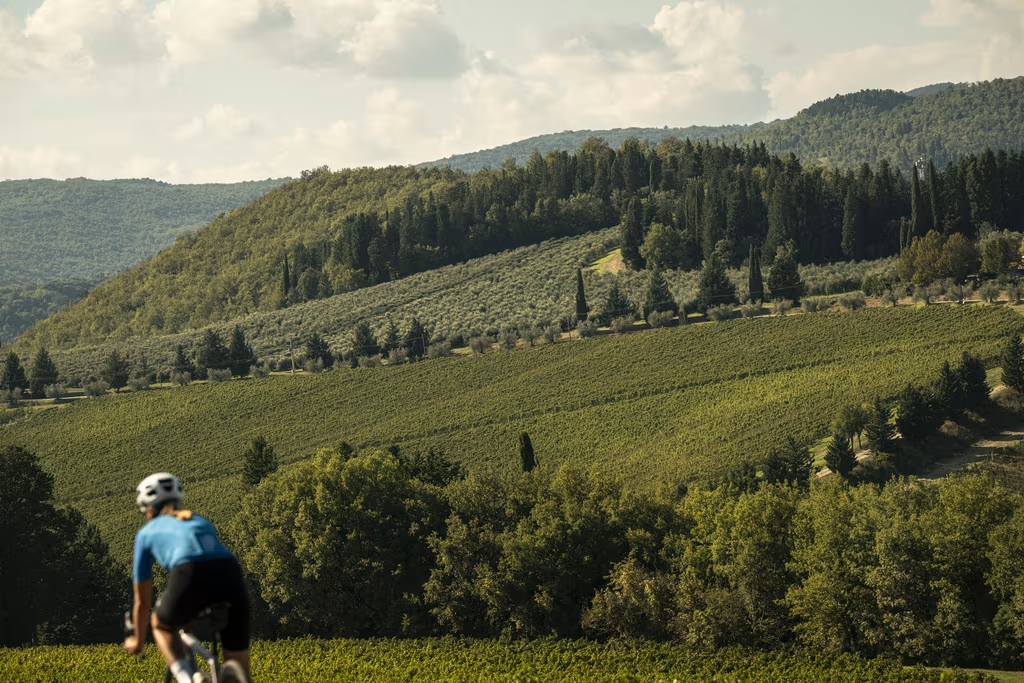
The province of Lucca has two denominations: the Colline Lucchesi and Montecarlo. Roughly a sixth of farms in the Lucchesia practice biodynamic viticulture, making the area one of the highest concentrations in Italy. Why? The grounds are uniquely fertile, and the area has up to five micro- and macroclimates.
Winemakers of the Lucchesia work relatively small vineyards, quietly producing outstanding wines. Given limited production, it’s no surprise they’re overshadowed by areas like Chianti, Val d’Orcia, and the Tuscan Maremma.
Visit any vintner of the Colline Lucchesi, and you’ll soon see that off-the-charts economic prosperity isn’t a primary currency of wealth. Strong relationships and a deep passion for a craft that speaks for itself are their sole marketing channels.
Stop by their cellar and see for yourself. You’ll find Michelin-star establishment wines at a fraction of the price.
Top Recommendations: Fabbrica di San Martino, Tenuta di Valgiano, Terre del Sillabo, Fattoria di Fubbiano
I hope this list of things to do in Lucca serves you during your travels. I’d love to hear how things went in the comments below. Buona vacanza and have fun!
I’ve been to Lucca three times already, twice for cycling with fantastic support by Lucca Cycling Club. You’ve mentioned a few things that were still on my list to do and added some more – thank you. I can’t wait to go back.
Cheers, Stoph
Stoph—it’s people like you that make our world go ’round. Can’t wait to have you back.